
Recently, after dropping my two children off at the learning studio they attend, I went for my usual morning walk.
I enjoy walking in nature. Something about it soothes me. I especially love being near water and trees—green trees, flowers, open spaces. The world feels quieter during those moments. More peaceful.
As I was walking that morning, my phone rang.
It was my mother.
As soon as I answered, I could hear the frustration in her voice.
She was upset because she believed my stepdad and I had been making appointments for her without including her.
On the inside, I felt myself getting irritated by her tone. But given the memory changes she has been experiencing, I also knew I couldn’t take it personally.
So I began explaining.
I found myself going back over the details of a medical appointment and reminding her of a conversation I remembered clearly but she no longer did.
It was one of those moments that made the shift in our relationship feel very real.
Increasingly, I am the one remembering the appointments, the conversations, what was said, why something was scheduled, and what is supposed to happen next.
In some ways, I am beginning to carry pieces of my mother’s memory for her.
This has become part of our new normal. My stepdad experiences it much more intensely because he is with her every day. And as my mother navigates these changes, there are moments of understandable frustration—for her and for the people closest to her.
I can only imagine how unsettling it must feel to realize that other people remember conversations and experiences that you cannot.
I first began noticing subtle changes about two years ago.
When I mentioned my concerns to others, they were often minimized.
Your mom is just getting older.
Don’t think like that.
Don’t try to diagnose her.
The signs were small then, and I understood why other people didn’t immediately see what I was seeing.
But now, in 2026, here we are.
I’ve taken some time away from work so I can be more hands-on with my mother and stepdad. I’ve created a family planning guide to help us prepare for what may be ahead. I’m making an effort to attend more appointments, help schedule what needs to be scheduled, research community resources, and find support for our family.
It’s a lot.
I’m also the mother of two elementary-aged children. My husband has a job that keeps him away from home for days at a time. I’m working, parenting, managing a household, and now learning how to help care for a parent.
Some days, I’m not sure how I’m going to continue doing all of it.
And we’re only at the beginning.
There is also a strange role reversal happening between my mother and me.
I’m becoming involved in decisions and responsibilities that she once handled entirely on her own. I’m reminding her of things. I’m making calls. I’m keeping track of details. I’m thinking ahead about what she might need.
That’s an adjustment for both of us.
I know my mother appreciates what I’m trying to do. I can see her softening a little over time and becoming more willing to accept help.
But I also know we’re both struggling with this new version of our relationship.
She is still my mother.
I am still her daughter.
And yet, somewhere in the middle of all of this, I’m learning how to care for the woman who has spent my entire life caring for me.
I often wonder whether I’m doing enough.
Sometimes I wish I didn’t have to work at all so I could simply be available for her. But I also have a family to help support and children who need me.
And I’m learning something else along the way: caring for my mother means I have to become more intentional about caring for myself.
Even before taking on more caregiving responsibilities, I had already been struggling with low energy, fatigue, and the feeling that I wasn’t functioning at my best. I’ve been trying to pay closer attention to what my body and mind need and to get to the root of what has been making everyday life feel harder than it should.
I’m making progress toward my health goals. I seek out mental health counseling. I’m starting a monthly virtual mental health check-in where people can have space to decompress and support one another. I’m also following up on some health concerns because I want to have the strength and energy to care for myself and the people I love.
For a long time, taking care of myself could feel like something I would get around to after everything else was handled.
I’m beginning to understand that it can’t work that way anymore.
I have to take care of myself and give myself what I need because other people need me, too.
My children need me.
My family needs me.
And right now, my mother needs me in a new way.
I don’t know exactly what the coming years will look like. There are days when the responsibility feels frightening and days when I wonder whether I’ll have enough energy for everything that’s being asked of me.
But I do know this:
My mother has shown up for me throughout my life.
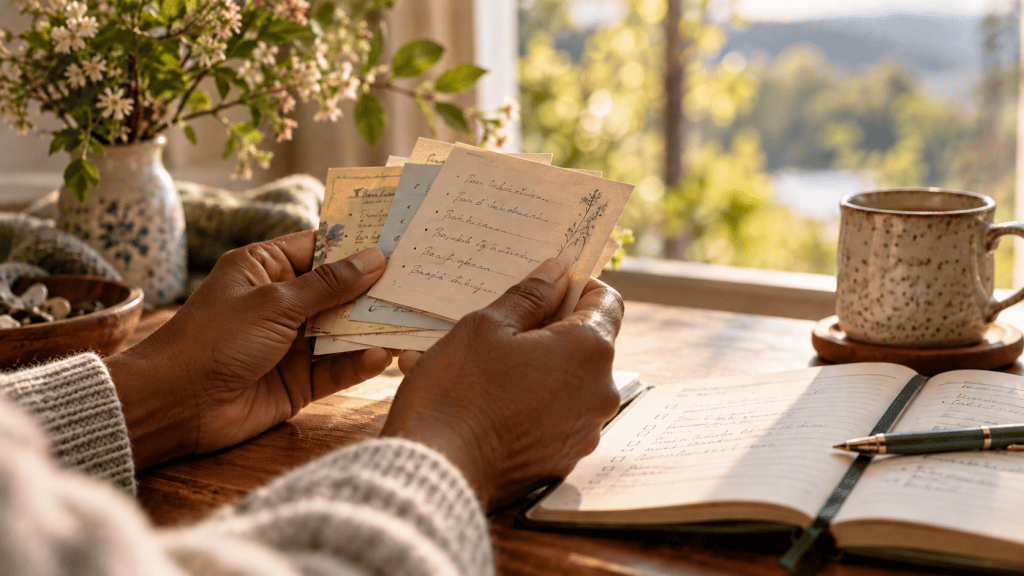
And as our roles begin to shift—as I make appointments, remember conversations, write things down, and hold pieces of the story she sometimes cannot—I am determined to show up for her, too.
One memory at a time.
Looking for a practical caregiving resource?
I created the Family Dementia Care & Planning Binder to help families organize important information, care responsibilities, and future planning in one place.


Leave a Reply